
Strengthening the Skin Barrier: How to Recognize and Repair a Damaged Skin Barrier
Dry, flaky skin, feelings of tightness, sudden redness, or a burning sensation after applying your usual skincare? A weakened skin barrier may be behind these symptoms.
The skin barrier helps retain moisture in the skin while simultaneously protecting it from external influences. When it is weakened, the skin loses water more easily and can react more sensitively to environmental factors and skincare products.[1]
An intact skin barrier is therefore an important prerequisite for healthy, resilient, and long-term smooth skin.
What is the skin barrier?
The skin barrier is located in the outermost area of our epidermis, the so-called horny layer or stratum corneum.
We can imagine its structure like a brick wall. The skin cells, called corneocytes, form the bricks. In between, there is a lipid matrix that acts like the mortar of a wall. This lipid matrix consists mainly of ceramides, cholesterol, and free fatty acids. Together, they form lamellar structures and help to limit water loss through the skin and make it more difficult for foreign substances to penetrate.[1]
If this structure is disrupted, transepidermal water loss (TEWL) often increases. The skin loses moisture more easily and can become dry, rough, and sensitive.[1]
The slightly acidic pH of the skin surface also plays a role. The slightly acidic pH of the skin supports the natural skin flora and helps to inhibit the proliferation of unwanted germs. Additionally, the acidic pH supports enzymes that are essential for the construction and maintenance of our skin barrier.[2]
7 signs of a damaged skin barrier
A disrupted skin barrier can manifest in various ways. You will recognize it most frequently by the following symptoms:
1. Dry and flaky skin
If the skin barrier is under attack, it can no longer adequately fulfill its most important protective function. The skin loses more water to the outside and is less able to retain moisture. As a result, it feels increasingly dry, rough, and tight. In the case of a more severe barrier disruption, visible flaking can also occur.[1]
Common triggers are barrier-weakening emulsifiers that interact with the lipids of the horny layer, thereby damaging the skin barrier.[6]
2. Feeling of tightness after cleansing
If your skin feels very tight immediately after facial cleansing, your cleanser is stripping too much oil and/or contains barrier-weakening, conventional emulsifiers. This results in an interaction between the proteins and lipids of the horny layer. This can promote dryness and barrier disruptions.[4]
3. Your skincare suddenly burns
Your cream or serum has always felt pleasant on your skin, and suddenly it burns or stings upon application? This can be an indication that your skin has become more sensitive and its barrier function is impaired.[3] Because when the protective barrier is weakened, the skin often reacts much more sensitively to ingredients and external stimuli that were not a problem at all before.
By the way, this can also explain why skin tolerance changes over the course of life. Especially during menopause, the skin often becomes drier, thinner, and more sensitive. Skincare that you have managed well with for years can then suddenly feel unpleasant.
4. Redness and increased sensitivity
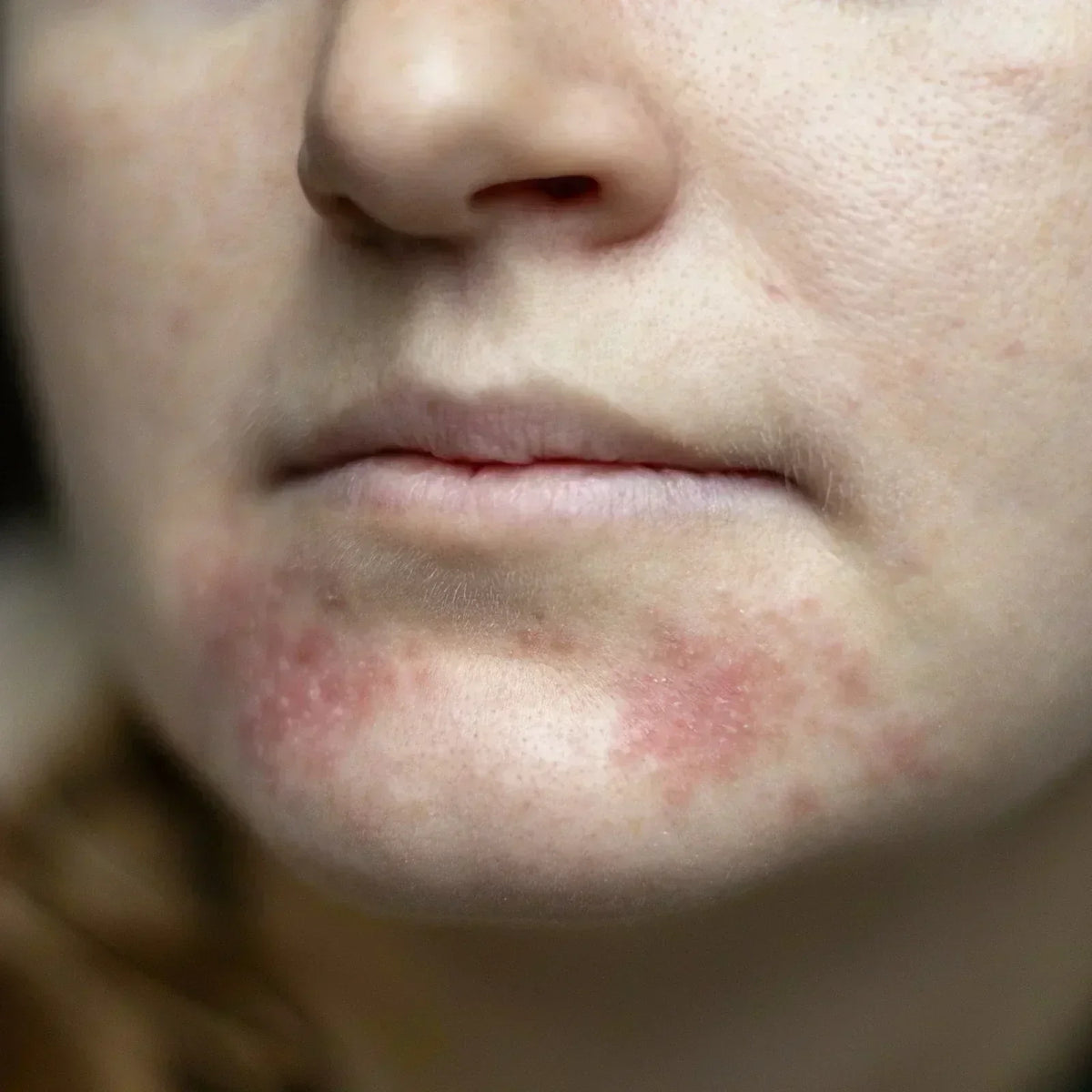
Cold, wind, dry heating air, or a new skincare product quickly throw your skin off balance? A weakened skin barrier can be behind this, too. If its protective function is impaired, the skin is less able to defend itself against external influences and reacts more quickly with irritation.
This can be noticeable, for example, through redness, an unpleasant feeling of warmth, or generally increased sensitivity. Especially when your skin suddenly reacts to things that didn't bother it much before, it is worth taking a look at the condition of your skin barrier.
5. Itching
Itching can also be related to a disrupted skin barrier.[1] If the barrier is weakened, the skin loses moisture more easily and becomes increasingly dry. At the same time, it is less well-protected against external stimuli.
A strong itch is not necessarily typical. Sometimes it is just that subconscious urge to constantly stroke or scratch a dry or irritated area of skin. Especially if dryness, feelings of tightness, or flaking occur at the same time, a weakened skin barrier may be the culprit.
6. Blemishes and an imbalanced complexion
A disrupted skin barrier can also play a role in blemished skin. If the protective function is impaired, the skin loses moisture more easily and is less able to defend itself against invading germs.
7. Sudden hypersensitivity
Your skin has actually always tolerated your skincare routine well, but over time it reacts sensitively to more and more products? Then it is worth taking a closer look at the ingredients in your skincare. We are particularly critical of conventional emulsifiers here, as they interact with the lipids of the horny layer and damage the skin barrier.[6] The problem with this: This effect does not have to be visible immediately after the first application. With repeated use, the effects on the skin barrier can become noticeable over a longer period. It can happen that you initially tolerate a cream well and your skin only gradually becomes drier, more sensitive, or more reactive.
If your skin suddenly seems to "not tolerate anything anymore," we therefore recommend first simplifying your skincare routine significantly and taking a closer look at the formulation base of the products you are using.
What weakens the skin barrier?
Often, it is not a single factor that is responsible. Rather, the skin is repeatedly stressed over a longer period of time, so that its natural protective function is impaired.
Emulsifiers in face creams
Emulsifiers are used in conventional creams to bind water and oil together. However, this emulsifying property has a downside as soon as we apply it to our skin.
Conventional emulsifiers interact with the lipids of the horny layer and attack our skin barrier. In a 2023 study, for example, PEG 20 cetyl ether and PEG 20 stearyl ether significantly worsened the barrier function in a skin model. [6]
The skin becomes more permeable to pollutants, and it then tends to develop chronic dryness, hypersensitivity, pimples, and blemishes. The more we apply such emulsifier-containing products, the worse it gets - a vicious cycle.
At myrto, we have consciously decided to forgo conventional emulsifiers in our DMS face creams. For us, the formulation base of a cream is just as important as the active ingredients it contains. Instead of classic emulsifiers, we rely on, among other things, skin-identical phosphatidylcholine and our plant fiber concept.

Overly aggressive facial cleansing
Facial cleansing is intended to remove excess sebum, dirt, sunscreen, and makeup. At the same time, it should affect the natural protective layer as little as possible.
Aggressive surfactants interact with proteins and lipids of the horny layer. They promote dryness, feelings of tightness, and irritation.[4] Studies also show that aggressive surfactants alter the lipid organization of the stratum corneum or partially remove the skin's own lipids.[5]
Too frequent exfoliation and too many active ingredients
Acids, mechanical scrubs, and other exfoliating active ingredients specifically remove superficial horny cells. However, if they are used too frequently, skin that is already sensitive is further stressed. The combination of numerous highly active ingredients is also not automatically better for your skin and can lead to skin irritation.
We are particularly critical of retinol for skin that already has a weakened or very sensitive skin barrier. In the short term, retinol seems to reduce wrinkles, but at the same time, it impairs the protective function of the skin barrier. In addition to known side effects such as dryness, flaking, redness, itching, and burning, retinoids intervene in basic processes of the epidermis. They influence keratinization, loosen the cohesion of horny cells, and alter structures that are crucial for an intact skin barrier.
For sensitive and barrier-disrupted skin, we therefore prefer gentler anti-aging ingredients such as peptides or bakuchiol, which can be combined with a barrier-oriented skincare routine.
5 tips for a strong skin barrier
If you want to rebuild your damaged skin barrier and strengthen it in the long term, it is not about using as many active ingredients as possible. What is crucial is a skincare routine that stresses your skin as little as possible and supports its natural barrier function.
1. Cleanse your skin as gently as possible
Good cleansing removes dirt, excess sebum, and makeup without unnecessarily stripping the skin of oil.
For sensitive combination skin and oily skin, we rely on mild, wash-active amino acids instead of aggressive surfactants in our Deep Cleansing Gel. These particularly skin-friendly surfactants cleanse gently without unnecessarily burdening the skin's own acid mantle.
For makeup, sunscreen, or heavier dirt, we recommend our Deep Cleansing Oil as the first cleansing step. It dissolves makeup and dirt particularly gently before the skin is cleansed in a second step with the Deep Cleansing Gel.
For dry, normal, or sensitive combination skin, surfactant-free cleansing is particularly suitable.
Above all, pay attention to how your skin feels afterward. It should be clean but neither feel very tight nor look dry or rough.


2. Look for an emulsifier-free formulation base
When choosing a face cream, do not just look at individual active ingredients such as ceramides or hyaluronic acid. The foundation of your cream is particularly decisive.
For us, therefore, avoiding conventional emulsifiers is one of the fundamental building blocks of barrier-oriented skincare. Our DMS face creams are instead based on, among other things, hydrogenated phosphatidylcholine. Phosphatidylcholine belongs to the phospholipids and can form lamellar structures. A study published in 2024 on a saturated phosphatidylcholine-based cream showed a structured arrangement that is oriented toward the natural architecture of the stratum corneum.[7]
Additionally, we use finely ground pectin from plant fibers to physically stabilize the water and oil components of our creams.


3. Rely on beta-glucan
Instead of overloading your skin with as many active ingredients as possible, you can specifically focus on ingredients that suit barrier-oriented skincare.
Beta-glucan possesses moisturizing and inflammation-modulating properties and is associated with supporting the skin barrier and skin regeneration.[8]
Together with the phosphatidylcholine already described, beta-glucan is therefore a central component of our DMS face creams.
4. Avoid highly irritating active ingredients
If your skin is already dry, flaky, red, or sensitive, you should even more so not continue to use barrier-attacking active ingredients like retinol just because they are considered particularly "effective." Retinoids weaken the cohesion of horny cells in the skin barrier, so that germs can more easily enter the skin (more on this: Is retinol harmful? What the anti-aging hype doesn't tell you). With a weakened skin barrier, we therefore prefer barrier-gentle anti-aging ingredients such as peptides and bakuchiol. As long as your skin is irritated and sensitive, you should be careful with scrubs and acids at first.


5. Less is more
A weakened skin barrier does not automatically need more products. Constantly changing skincare routines, frequent exfoliation, and the combination of numerous highly concentrated active ingredients can actually make it more difficult to determine what your skin can actually tolerate.
A simple routine consisting of gentle cleansing, a barrier-focused emulsifier-free cream, and a few specifically selected active ingredients is often the better foundation.
How long does a damaged skin barrier take to regenerate?
There is no general answer to this. How quickly your skin barrier regenerates depends, among other things, on how severely it is compromised and whether the triggering stressors persist.
In a controlled study, initial regeneration processes were measured within just 24 hours after a targeted barrier disruption. However, certain structural parameters required significantly longer. After four weeks, the measured values had returned to their baseline level.[11]
This does not mean that every damaged skin barrier requires four weeks to regenerate. Instead, pay attention to how your skin is developing: Are sensations of tightness and dryness subsiding? Do skincare products sting less? Is your skin becoming less sensitive overall?
In the case of persistent or severe complaints, you should have the cause clarified by a dermatologist, as redness, itching, and flaking can also be caused by skin conditions.
Conclusion: A strong skin barrier begins with the right skincare foundation
An intact skin barrier helps your skin retain moisture and protect itself against external influences.[1] It is therefore an important building block for slow aging. When it comes to long-term skin health, our skin barrier is the fundamental foundation. This is because, as we age, the skin regenerates more slowly and often becomes drier and more sensitive. Especially during menopause, hormonal changes can further intensify this development. It is all the more important to maintain and strengthen our natural skin barrier and its protective function.
When it is weakened, the main rule is: less irritation and more targeted support. A mild cleanser, a clear skincare routine, and barrier-strengthening ingredients form a good basis for this. For sensitive skin, we also prefer gentler anti-aging active ingredients like peptides and bakuchiol over retinol.
For us, avoiding conventional emulsifiers is also one of the fundamental building blocks of barrier-oriented skincare. That is why our DMS face creams are based on skin-identical phosphatidylcholine, beta-glucan, and our emulsifier-free plant fiber concept.
Frequently asked questions about the skin barrier
How do I recognize a damaged skin barrier?
How can I strengthen my skin barrier?
How long does the skin barrier take to regenerate?
What damages the skin barrier?
Which active ingredients strengthen the skin barrier?
Which cream is suitable for a damaged skin barrier?
Can emulsifiers damage the skin barrier?
Is retinol suitable for a damaged skin barrier?
Can a damaged skin barrier cause pimples?
How should I cleanse my skin if my skin barrier is damaged?
Sources
[1] Schild J, Kalvodová A, Zbytovská J, Farwick M, Pyko C. The role of ceramides in skin barrier function and the importance of their correct formulation for skincare applications. International Journal of Cosmetic Science. 2024;46(4):526–543. DOI: 10.1111/ics.12972.
[2] Brooks SG, Mahmoud RH, Lin RR, Fluhr JW, Yosipovitch G. The Skin Acid Mantle: An Update on Skin pH. Journal of Investigative Dermatology. 2025;145(3):509–521. DOI: 10.1016/j.jid.2024.07.009.
[3] Misery L et al. Sensitive skin. Journal of the European Academy of Dermatology and Venereology. 2016. DOI: 10.1111/jdv.13532.
[4] Ananthapadmanabhan KP, Moore DJ, Subramanyan K, Misra M, Meyer F. Cleansing without compromise: the impact of cleansers on the skin barrier and the technology of mild cleansing. Dermatologic Therapy. 2004;17 Suppl 1:16–25.
[5] Ananthapadmanabhan KP, Mukherjee S, Chandar P. Stratum corneum fatty acids: their critical role in preserving barrier integrity during cleansing. International Journal of Cosmetic Science. 2013;35(4):337–345. DOI: 10.1111/ics.12042.
[6] Schoenfelder H, Liu Y, Lunter DJ. Systematic investigation of factors, such as the impact of emulsifiers, which influence the measurement of skin barrier integrity by in vitro trans epidermal water loss. International Journal of Pharmaceutics. 2023;638:122930. DOI: 10.1016/j.ijpharm.2023.122930.
[7] Fluhr JW, Darlenski R, Daehnhardt Pfeiffer S, Albrecht M. Impact of multilamellar formulations on stratum corneum lipid organization and epidermal lipid barrier enhancement (Part II). International Journal of Cosmetic Science. 2024;46(4):578–589. DOI: 10.1111/ics.12971.
[8] Feng X, Shang J, Wang Y, Chen Y, Liu Y. Exploring the Properties and Application Potential of β Glucan in Skin Care. Food Science & Nutrition. 2025;13(4):e70212. DOI: 10.1002/fsn3.70212.
[9] Tanno O et al. Nicotinamide increases biosynthesis of ceramides as well as other stratum corneum lipids to improve the epidermal permeability barrier. British Journal of Dermatology. 2000;143(3):524–531.
[10] Kono T, Miyachi Y, Kawashima M. Clinical significance of the water retention and barrier function improving capabilities of ceramide containing formulations: A qualitative review. Journal of Dermatology. 2021;48(12):1807–1816. DOI: 10.1111/1346-8138.16175.
[11] Gorcea M, Hadgraft J, Lane ME, Moore DJ. In vivo barrier challenge and long term recovery in human facial skin. International Journal of Cosmetic Science. 2013;35(3):250–256. DOI: 10.1111/ics.12034.