
Treating and preventing pigment spots
What are hyperpigmentation spots?
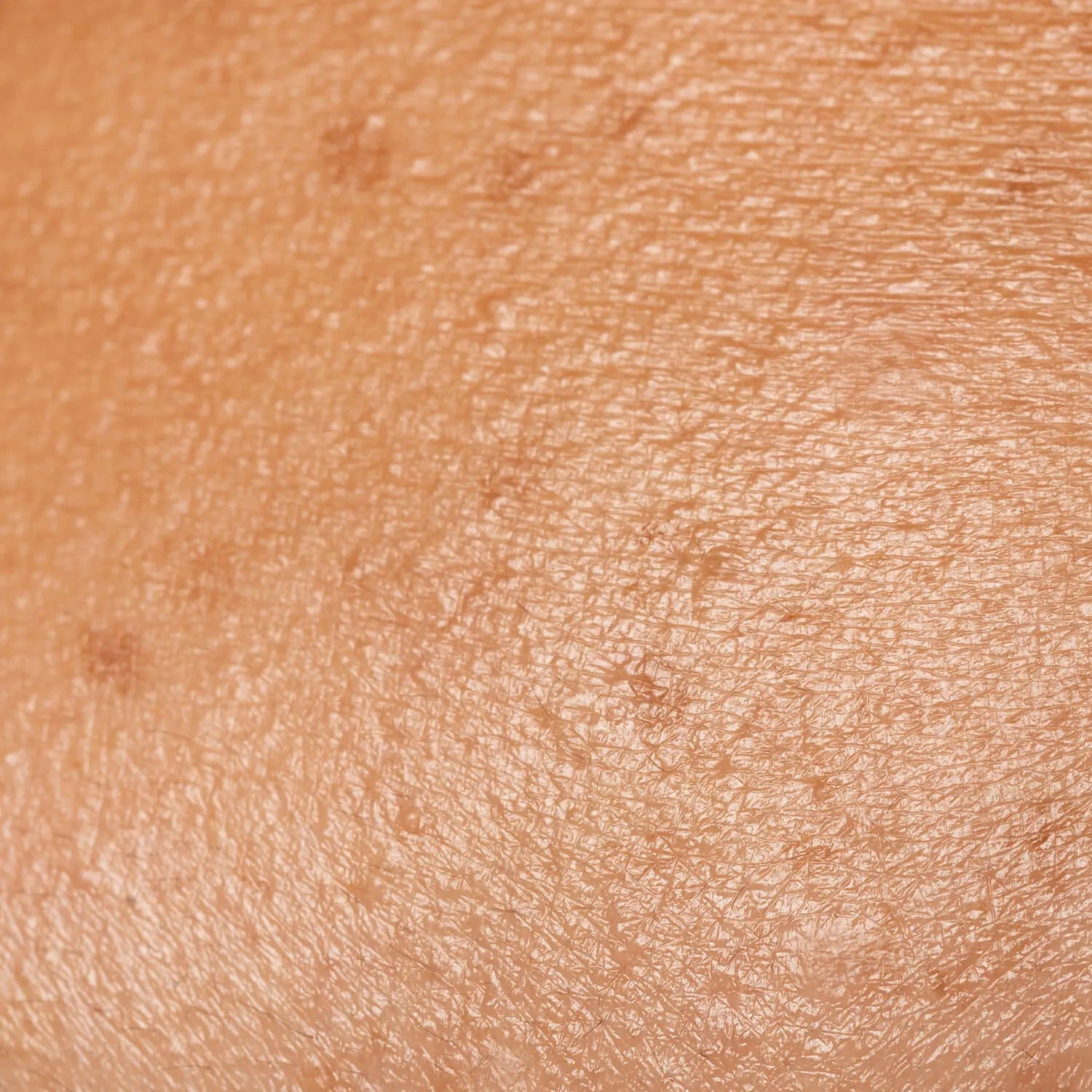
Hyperpigmentation spots, particularly dark age spots, are considered unattractive, even though they generally do not pose a health risk. Brown spots make the skin appear uneven and significantly older. In the face, hyperpigmentation such as age spots or acne scars can be covered with make-up, but there are also ways to permanently fade hyperpigmentation. Dermatological treatments promise quick and lasting success, but they come with undesirable side effects. Alternatively, there are many home remedies recommended, though unfortunately most are ineffective. A much better option is highly skin-compatible natural cosmetic active ingredients that slowly fade hyperpigmentation without side effects.
Common types of hyperpigmentation spots
There are 4 common forms of hyperpigmentation:
-
Sun spots or age spots
usually appear after the age of 40. These small pigment shifts primarily occur in body areas most exposed to sunlight: on the face, neck, forearms, and hands. -
Melasma
have frayed edges and are generally larger than other hyperpigmentation spots. They are mostly hormonally induced by an excess of female sex hormones estrogen and progesterone, for example during pregnancy. Melasma also appears on skin areas that are frequently exposed to the sun. -
Post-inflammatory discoloration
such as pimple marks usually occur after inflammatory skin conditions like acne or after skin injuries. Once the wound has healed, a dark pigmented area can remain due to an overproduction of melanin. -
Freckles
are reddish to golden-brown small pigment spots on the face, arms, and shoulders, which appear particularly in summer in very fair-skinned people of Celtic skin type with particularly light-sensitive skin. Freckles fade again in the months with less sun.
Are hyperpigmentation spots dangerous?
In principle, hyperpigmentation spots are harmless. Freckles are even considered attractive and highlight a natural radiance. Other hyperpigmentations such as sun or age spots, however, are perceived as bothersome, although they do not need to be removed from a medical point of view.
In exceptional cases, if a hyperpigmentation spot has an asymmetrical shape, an irregular border, shows dark and light color gradations, enlarges or changes quickly, this could be a degeneration and indicate a malignant melanoma or skin cancer. In such a case, you should have the hyperpigmentation examined by a dermatologist.
How do hyperpigmentation spots form?
The pigment melanin, produced by melanocyte cells, is responsible for the natural brown coloration of the skin as protection against sunlight. Melanin serves as protection for the skin against cell damage. Dark hyperpigmentation spots occur when the melanocytes in the epidermis, i.e., the uppermost skin layers, produce excessive amounts of melanin, leading to local accumulations of the pigment.
What causes hyperpigmentation spots?
Hyperpigmentation spots can have many causes. These are the most important ones:
-
UV radiation
The formation of hyperpigmentation spots is primarily related to excessive UV radiation from extensive sunbathing and insufficient sun protection. -
Waste products from oxidative stress
Pigmentation disorders due to sun or age spots are also a consequence of oxidation processes in the skin. When the unsaturated fatty acids of cell membranes are damaged by oxidative stress, waste products are formed, e.g., as accumulations of the pigment lipofuscin. These become visible as dark spots. -
Genetic and hormonal factors
A genetic predisposition favors the formation of hyperpigmentation spots. Hyperpigmentations are more common in women than in men. Pigmentation disorders are further exacerbated by long-term use of hormonal contraceptives. -
Diseases and medications
Diseases such as an over- or underactive thyroid or diabetes mellitus can also lead to hyperpigmentation. Some antibiotics or chemotherapeutic drugs also increase the skin's light sensitivity.
Dermatological removal of hyperpigmentation spots
There are various dermatological treatments for the medical removal of hyperpigmentation spots and skin discolorations, but all of them have their unpleasant side effects.
-
Laser therapy
In dermatological laser treatments, pigment accumulations are destroyed by laser light-based energy. -
Microneedling
During professional needling, a so-called dermapen with many small needles is placed on the hyperpigmented skin areas and repeatedly introduced into the tissue. The micro-injuries are intended to reduce bothersome hyperpigmentation spots on the skin and stimulate collagen production. -
Microdermabrasion
In this treatment, the uppermost skin layer is abraded with a special polishing device made of fine crystals to stimulate skin renewal, smooth the skin, and reduce pigmentation disorders. -
Cryotherapy
In this method, hyperpigmentations are frozen with liquid nitrogen. The extreme cold causes the hyperpigmented cells to die. The cold shock is intended to stimulate the formation of new collagen tissue. -
Peelings against hyperpigmentation spots
In this dermatological treatment, chemical substances, concentrated fruit acids, or trichloroacetic acid are applied to the pigmented skin areas. As a result, the upper skin layers peel off. This is intended to stimulate the formation of new skin cells.
Disadvantages of dermatological procedures
-
Skin irritations
After dermatological treatments, there is a long-term increased light sensitivity, as well as increased skin irritations, redness, swelling, or even scarring. After laser therapy, for example, the skin must not be exposed to the sun for at least 4 months – except with sun protection factor 50. Even after many months or even years, the widely treated skin barely manages to regain its former balance and build a strong skin barrier. Such damaged skin is all the more susceptible to the formation of new hyperpigmentation spots. -
Vitamin D deficiency due to permanently high sun protection factor
After dermatological treatments, a permanently very high sun protection factor becomes necessary. This promotes a vitamin D deficiency, as the body's own vitamin D production is completely prevented. This leads to a vitamin D deficiency, which manifests as constant fatigue, exhaustion, and malaise. A vitamin D deficiency can also be responsible for increased susceptibility to infection, depression, or hair loss.
Brighten hyperpigmentation spots with natural active ingredients
Natural active ingredients like Vitamin C, Bakuchiol, or Niacinamide help against hyperpigmentation spots and an uneven skin tone in a skin-friendly, demonstrably effective, and gentle way. These natural active ingredients do not remove age spots immediately but fade them, so that hyperpigmentations gradually become less visible.
Vitamin C
Vitamin C ensures that already stored melanin is removed more quickly from dark discolored skin cells. Vitamin C also has the ability to inhibit the formation of new hyperpigmentations directly and to make the skin tone more even. With its antioxidant effect, Vitamin C prevents environmental cell damage from free radicals. Vitamin C also improves the skin's own protection against UV radiation in combination with sun protection. The Vitamin C Complex Serum is therefore an ideal complement to the Sunshine Day Oil.
Niacinamide
Vitamin B3 or Niacinamide not only works against impurities and pimples but also inhibits melanin production in pigment cells, making dark discolorations lighter. Our Niacinamide Complex Serum contains 12% Niacinamide. This makes it highly effective against hyperpigmentations such as age spots or dark acne marks. Niacinamide serum has also proven effective against redness in rosacea.
Bakuchiol
Bakuchiol is the natural and skin-friendly alternative to synthetic retinol, known for its potentially irritating side effects. Bakuchiol stimulates cell division, so that the upper skin layers renew faster and pigment or age spots fade significantly. Our Bakuchiol Oil Serum contains a pure active ingredient content of 1% Bakuchiol.
Azelaic acid
Our Azelaic Serum contains 10% Potassium Azeloyl Diglycinate (PAD) – a particularly skin-friendly derivative of azelaic acid. PAD inhibits excessive melanin production in the pigment cells and helps to gradually brighten existing hyperpigmentation spots, pimple marks, and an uneven skin tone. At the same time, the active ingredient has anti-inflammatory properties and regulates increased sebum production. This makes PAD particularly suitable for blemished skin, acne, or rosacea, where inflammatory hyperpigmentations frequently occur.
Unlike classic azelaic acid, PAD irritates the skin significantly less often and is therefore also very well suited for sensitive skin. Its moisturizing properties additionally support the skin barrier and ensure a smoother, more even skin appearance.
For optimal results, the Azelaic Serum can be ideally combined with the Vitamin C Complex Serum. While Vitamin C reduces oxidative stress and inhibits the formation of new hyperpigmentation spots, PAD specifically regulates melanin production and supports the gradual fading of existing hyperpigmentations.
Consistent sun protection
To prevent hyperpigmentation spots, consistent sun protection is especially necessary. Our Sunshine Day Oils offer daily protection against light-induced skin aging from UVB and UVA radiation. For enhanced UV protection, additionally use a mineral sunscreen filter on top. You should generally avoid the midday sun between 11 AM and 3 PM in summer. Extensive sunbathing is also not advisable if you want to prevent UV-induced skin damage such as hyperpigmentation spots. Protect your face, neck, and décolleté with a sun hat, protect your eyes with high-quality sunglasses. Cover your particularly vulnerable body areas with clothing made of natural fibers as effective sun protection.
Special care against hyperpigmentation spots: The Brightening Vitamin Serum

Hyperpigmentation spots are caused by various processes in the skin. Therefore, several synergistically coordinated active ingredients often achieve better results than a single ingredient. Our Brightening Vitamin Serum offers a particularly effective and at the same time uncomplicated solution. It combines three scientifically well-researched active ingredients in one formulation:
- 4% Niacinamide reduces the transfer of melanin to the upper skin layers and contributes to a more even complexion.
- 0.6% Bakuchiol inhibits inflammatory processes, promotes skin renewal, and can visibly brighten sun-induced hyperpigmentation and dark acne marks.
- Stabilized Vitamin C acts as a powerful antioxidant, protects against oxidative stress, supports collagen formation, and gives the skin new radiance.
This combination addresses various mechanisms of hyperpigmentation formation simultaneously. The emulsifier-free DMS serum also strengthens the skin barrier, moisturizes, and is suitable for sensitive skin.
Patience with deeper-seated hyperpigmentation spots and dark acne marks
To effectively combat deeper-seated hyperpigmentation spots with natural active ingredients, you need a lot of patience. The deeper the dark skin pigment melanin is deposited, the longer it takes for the discolorations to visibly lighten. For deep-seated melanin deposits, this can take several months, sometimes even years.
Antioxidants from within
You can prevent hyperpigmentation spots not only externally but also internally by incorporating plenty of vitamin-rich fruits, raw vegetables, and nuts into your diet, preferably seasonal and organic.
Conclusion
Hyperpigmentation spots can be visibly reduced long-term with a consistent care routine and daily UV protection. Combinations of antioxidant, anti-inflammatory, and pigment-regulating active ingredients are particularly effective. Our Brightening Vitamin Serum combines Vitamin C, Niacinamide, and Bakuchiol in a highly compatible, emulsifier-free formulation. It simultaneously works against hyperpigmentations, acne marks, and a dull complexion, strengthens the skin barrier, and provides a more even, radiant complexion with regular use.