
Rosacea and couperose – differences and proper care
Couperose vs. Rosacea: Differences, typical triggers, and gentle, irritation-free care. Learn how you can reduce redness and soothe sensitive skin in the long term with UV protection, a low-trigger routine, and lifestyle & nutrition tips – including anti-inflammatory ingredients and suitable product recommendations.
Introduction
Facial redness is a sensitive issue for many sufferers – it can indicate couperose or rosacea . Both skin conditions are similar, but differ in their progression and severity. While couperose usually only presents with dilated blood vessels and temporary redness, rosacea is a chronic inflammatory skin condition. With targeted, gentle skincare, a mindful lifestyle, and avoiding typical triggers, symptoms can be significantly alleviated. We'll explain what causes the redness and how you can best care for couperose or rosacea-prone skin.
What is couperose?
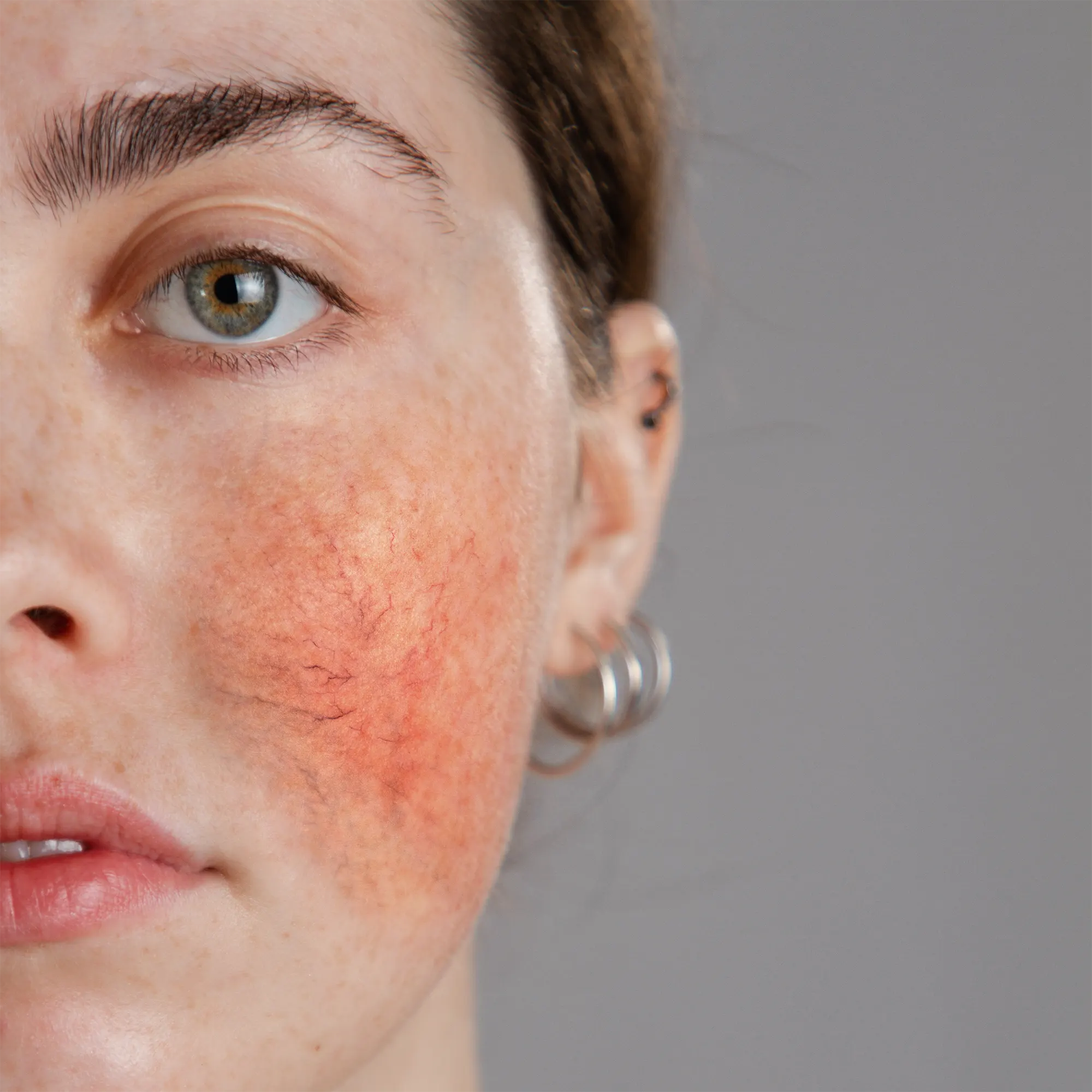
Couperose describes dilated, superficial blood vessels (telangiectasia) on the face – primarily on the cheeks, nose, and chin. Fine, coppery-red veins are visible, often accompanied by sudden, fleeting redness ("flushes"). Very sensitive, fair skin and weak connective tissue are frequently affected.
Characteristics of couperose
- visible, fine blood vessels (telangiectasia)
- Redness, temporary or permanent, but without inflammatory pustules
- intensified by heat/cold, UV radiation, alcohol, nicotine, coffee, spicy foods
- More of a cosmetic issue; can remain stable
What is rosacea?
Rosacea is a chronic inflammatory skin condition, commonly occurring between the ages of 30 and 50. Typical symptoms include persistent redness, dilated blood vessels, and inflammatory papules, pustules, and nodules. In men, thickening of the skin (e.g., rhinophyma on the nose) may occur. The condition can present in flare-ups, sometimes accompanied by a burning or stinging sensation on the skin; the eyes can also be affected (ophthalmic rosacea).
Characteristics of rosacea
- Persistent redness, visible blood vessels, inflammatory papules/pustules
- A tingling, burning sensation is possible.
- Intermittent, chronic course; ocular involvement possible
Differences between couperose and rosacea
| feature | Couperose | Rosacea |
|---|---|---|
| character | Vascular dilation, cosmetic | chronic inflammatory disease |
| Symptoms | visible veins, flushes | Persistent redness, papules/pustules, nodules |
| Course | often stable, without inflammation | in bursts, progressively |
| Severity | mild | medically relevant |
| risk | not necessarily development | If left untreated, it can progress |
Typical trigger factors
- UV radiation, heat (sun, sauna, hot baths), severe cold/wind
- Alcohol, coffee, nicotine
- very spicy food, very hot drinks
- Stress, strong emotions
- unsuitable skincare (alcohol, fragrances, harsh surfactants)
Lifestyle & nutrition tips
Skincare
- UV protection: Use a sunscreen with a high SPF.
- Gentle, irritation-free care: When cleansing your skin, avoid alcohol, fragrances, or harsh surfactants. Active ingredients like niacinamide, beta-glucan, or green tea extract, on the other hand, have a soothing effect and can reduce redness.
- Strengthen the barrier: Strengthen your skin barrier and consistently support the skin's protective functions with emulsifier-free products, preferably natural plant extracts, oils and antioxidants.
Nutrition
- Low-inflammatory: Include plenty of vegetables/fruit and Omega-3 sources (e.g., flaxseeds, walnuts) in your daily diet.
- Limit triggers: Avoid alcohol, coffee, very spicy & very hot foods/drinks as much as possible.
Lifestyle
- Stress management: Find ways to reduce stress, e.g. through breathing exercises, yoga, meditation, sports or walks.
- Temperature hygiene: Prefer lukewarm water for showering instead of hot baths; avoid sudden temperature changes.
Conclusion
Couperose and rosacea have some overlap, but differ significantly in the degree of inflammation and their progression. However, with a low-trigger routine, consistent UV protection, and gentle, fragrance- and alcohol-free skincare, you can usually calm and stabilize your skin considerably.
FAQ
Is couperose the same as rosacea?
No. Couperose shows visible blood vessels and flushing without inflammation, rosacea is a chronic inflammatory disease with flare-ups and papules/pustules.
Can couperose develop into rosacea?
It is considered a possible precursor, but does not necessarily develop further. Gentle skincare and trigger control reduce the risk.
What skincare products are suitable for rosacea and couperose?
Gentle, fragrance-free and alcohol-free formulations. Proven ingredients: niacinamide, beta-glucan, green tea extract; emulsifier-free, antioxidant, barrier-strengthening.
What kind of diet helps with rosacea?
Eat a low-inflammatory diet (vegetables, omega-3 sources), limit alcohol/coffee and very spicy/hot foods. Observe individual triggers.
Can rosacea be cured?
Rosacea is a chronic condition. However, with appropriate skincare, UV protection, and lifestyle adjustments, symptoms and flare-ups can be significantly reduced.
Suitable products
The following fragrance- and alcohol-free formulations are designed for sensitive skin prone to redness:

Azelaic Serum – against redness & blemishes

Magnolia Calming Serum – soothing for inflamed skin

Magnolia Facial Toner – clarifying & anti-inflammatory
👉 You can find all products for rosacea & couperose in our guide.