

Questions about Vitamin C in Beauty Care
Vitamin C is one of the most sought-after active ingredients in facial care – and for good reason. Vitamin C offers numerous benefits not only for the entire body, but also for a healthy, radiant complexion. At the same time, vitamin C protects against the signs of premature skin aging.
Essential nutrient for health
Vitamin C is an essential micronutrient that our bodies cannot produce themselves and therefore depend on a regular intake through our diet. The chemical name ascorbic acid for this vital nutrient comes from Latin: "ascorbin" means "no scurvy".
Scurvy, a disease once widespread among sailors, was caused by a vitamin C deficiency that persisted for several months and was a frequent cause of death for seamen. Those affected suffered from bleeding gums, joint inflammation, increased susceptibility to infections, fatigue, and skin problems with poor wound healing. After a British ship's doctor discovered in the 18th century that lemons or sauerkraut helped against scurvy, these foods became a staple on board long sea voyages.
Functions of Vitamin C in the body
- Strengthens the immune system: Vitamin C supports the formation of various immune cells that can destroy harmful bacteria or viruses in the body.
- Promotes wound healing: Vitamin C stimulates collagen production, thus supporting a strong and elastic wound scar.
- Binds free radicals: Vitamin C is able to destroy aggressive reactive oxygen species. These are increasingly produced by environmental pollutants, UV radiation, physical or mental stress, lack of sleep, or nicotine. Free radicals can damage and even destroy molecules, cells, and tissues in the body.
- Promotes the absorption of iron from food: Vitamin C improves the solubility of iron in the intestine and binds substances that inhibit the absorption of iron.
- It promotes detoxification: Vitamin C activates enzymes responsible for breaking down toxins. This can, for example, neutralize the damaging effects of nicotine or nitrosamines in the body, which are toxic nitrogen-containing compounds considered carcinogenic.
Vitamin C-rich diet
Depending on age, gender, and pregnancy, a daily intake of 0.2 to 1 gram of vitamin C is recommended. This important nutrient is abundant in lemons and other citrus fruits. Berries, especially sea buckthorn, rosehips, and blackcurrants, have a significantly higher vitamin C content. Among the top sources are the acerola cherry with 1.7 grams of vitamin C per 100 grams, camu camu fruit from the Amazon with 2 grams per 100 grams, and the Australian bush plum with up to 3 grams of vitamin C per 100 grams. Broccoli, kiwis, Brussels sprouts, bell peppers, tomatoes, and parsley are also rich in vitamin C and should be included in your diet.
What are the benefits of vitamin C in skincare?
-
Antioxidant against premature skin aging: Vitamin C is one of the most powerful antioxidants. As a free radical scavenger, this vitamin neutralizes aggressive molecules known as free radicals. Free radicals are harmful metabolic byproducts that steal an electron from other molecules in the skin, damaging them and causing our skin to age faster. Polluted city air, excessive UV radiation, stress, lack of sleep, alcohol, and cigarette consumption all contribute to oxidative stress on the skin, promoting the formation of free radicals. This can lead to increased wrinkle formation, as well as irritation, blemishes, pimples, acne, and redness. To prevent such cell and tissue damage, we need effective, skin-friendly skincare products with powerful antioxidants.
-
Increased collagen production: Vitamin C stimulates collagen production, which slows down from the age of 25. Collagen is a structural protein that is important for the firmness and elasticity of the skin. This contributes to the reduction of fine lines and wrinkles and improves skin firmness.
-
Anti-inflammatory effect: Vitamin C has also proven effective in treating skin conditions such as rosacea and acne. With its anti-inflammatory properties, vitamin C helps combat irritation, redness, blackheads, and pimples. It promotes healing and soothes the complexion.
-
Lightens pigment spots, age spots, and acne scars: Vitamin C inhibits excessive melanin production (hyperpigmentation, melasma) and can help lighten pigment spots. With regular use, bothersome age spots fade. The complexion appears more even and smoother. Acne scars are also lightened.
-
Healthy, radiant skin: Vitamin C, with its gentle exfoliating effect, loosens Gently exfoliates dead skin cells. Vitamin C gives dull or blotchy skin a healthy glow and natural radiance: clearer skin that glows from within.
Is pure vitamin C (L-ascorbic acid) good for sensitive skin?
Pure vitamin C (INCI: L-Ascorbic Acid) is not recommended for skincare for sensitive skin. While pure ascorbic acid does produce the fastest results, it is unstable and prone to oxidation. It requires a very acidic pH of approximately 3.5 or lower in a formulation to prevent it from decomposing into its components very quickly. Pure ascorbic acid is only suitable for robust and non-sensitive skin due to its relatively high potential for irritation.
Why is stabilized vitamin C better tolerated by the skin?
Stabilized forms of vitamin C such as ascorbyl glucoside, ethyl ascorbic acid, magnesium ascorbyl phosphate or sodium ascorbyl phosphate are well tolerated even by sensitive skin in moderate doses.

Ascorbyl glucoside, even in low concentrations, boosts collagen production, protects against light-induced skin damage, prevents oxidative stress, and slows down cell aging, as clinically proven. Its use in pH-neutral formulations makes it significantly gentler on the skin than pure L-ascorbic acid. Ascorbyl glucoside, in which ascorbic acid is bound to glucose, is also very well tolerated by sensitive skin. It is less prone to oxidation and is delivered particularly deep into the skin, where it is converted into pure vitamin C and stored (depot function).
You'll find stabilized vitamin C in our ACE&B3 Vitamin Serum , Anti-Pollution Serum T , and Regenerate Glow Mask . We use moderate concentrations below 1% to ensure optimal skin compatibility, even for very sensitive skin. For enhanced effectiveness and to better lighten age spots and acne scars, we've developed the Vitamin C Complex Serum with 3% ascorbyl glucoside. If your skin is new to vitamin C, we recommend starting with the lower concentrations. If your skin is already familiar with vitamin C, the Vitamin C Complex Serum is perfect.

Can vitamin C dry out the skin?
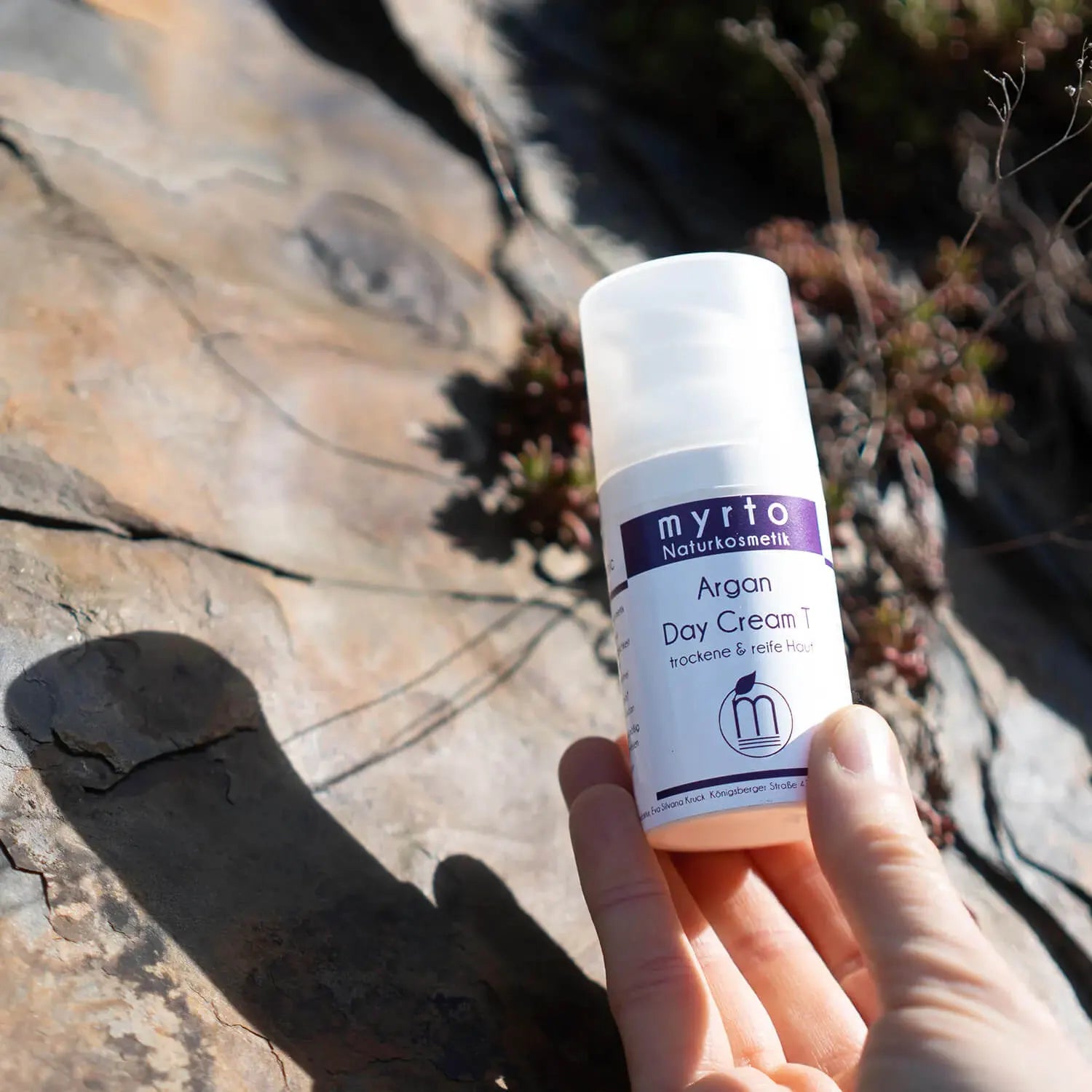
Sometimes, higher concentrations of vitamin C can temporarily cause dryness, irritation, or redness. If you have very sensitive or dry skin, start with a lower concentration and gradually increase the frequency of use to allow your skin to adjust. Additionally, use a richer moisturizer, such as our day creams or face masks, on top to strengthen your skin barrier, buffer your skin, and minimize irritation. If you experience any unusual reaction, discontinue use.
It's different when you combine bakuchiol, also known as bio-retinol, with vitamin C. Bio-retinol, or bakuchiol, is a plant-based ingredient that offers the same benefits to the skin as retinol—but without the irritation. Therefore, we safely combine ascorbyl glucoside, a stabilized form of vitamin C, with bakuchiol in our Vitamin ACE & B3 Serum.
Combine vitamin C with niacinamide?
Vitamin C and niacinamide work synergistically. Their combination enhances the antioxidant protection of both active ingredients against the damaging effects of free radicals. Since both also possess anti-inflammatory properties, their combination helps to soothe the skin, reduce irritation, and alleviate blemishes. Both vitamin C and niacinamide have skin-brightening properties and boost collagen production. Both active ingredients help improve skin texture, soften fine lines and wrinkles, and create a more even skin tone.
Combine vitamin C with sunscreen?
Studies show that vitamin C, due to its antioxidant properties, enhances the UV protection offered by sunscreens. While vitamin C alone cannot provide sufficient sun protection, it is beneficial to apply vitamin C serum under sunscreen. This allows the antioxidant properties of vitamin C to offer additional protection against cell damage caused by oxidative stress. The combination of sunscreen and vitamin C helps prevent premature skin aging caused by UVA, UVB, and infrared (IR) radiation, thus protecting the skin from wrinkles, sunburn, and skin cancer.
Is vitamin C better suited for a morning or evening skincare routine?
Facial care products containing vitamin C are recommended for both your daily morning and evening skincare routine. During the day, vitamin C provides excellent antioxidant protection against harmful environmental stressors and excessive UV radiation. Since vitamin C promotes an even complexion and a more radiant appearance, it's ideal for your morning routine. In the evening, your skin benefits from the regenerative properties that vitamin C also offers. Especially overnight, vitamin C can support skin repair and renewal.
If you choose to apply it twice a day, morning and evening, you can reap all the benefits of vitamin C. It's especially important to use vitamin C regularly and over a longer period to achieve the best results.
Combining vitamin C with retinol?
Dermatologists advise against combining vitamin C with retinol due to potential skin irritation. Retinol is a synthetic form of vitamin A used in skincare as an anti-aging ingredient to promote cell regeneration and is known for its frequent side effects such as irritation and redness.

It's different when you combine bakuchiol, also known as bio-retinol, with vitamin C. Bio-retinol, or bakuchiol, is a plant-based ingredient that offers the same benefits to the skin as retinol—but without the irritation. Therefore, we safely combine ascorbyl glucoside, a stabilized form of vitamin C, with bakuchiol in our Vitamin ACE & B3 Serum.
Combine vitamin C with niacinamide?
Vitamin C and niacinamide work synergistically. Their combination enhances the antioxidant protection of both active ingredients against the damaging effects of free radicals. Since both also possess anti-inflammatory properties, their combination helps to soothe the skin, reduce irritation, and alleviate blemishes. Both vitamin C and niacinamide have skin-brightening properties and boost collagen production. Both active ingredients help improve skin texture, soften fine lines and wrinkles, and create a more even skin tone.

Combine vitamin C with sunscreen?
Studies show that vitamin C, due to its antioxidant properties, enhances the UV protection offered by sunscreens. While vitamin C alone cannot provide sufficient sun protection, it is beneficial to apply vitamin C serum under sunscreen. This allows the antioxidant properties of vitamin C to offer additional protection against cell damage caused by oxidative stress. The combination of sunscreen and vitamin C helps prevent premature skin aging caused by UVA, UVB, and infrared (IR) radiation, thus protecting the skin from wrinkles, sunburn, and skin cancer.
Application of the myrto Vitamin C Serum